Posts

Showing posts with the label emergency

Emergency Water Sources

Image
 Even without emergency water storage, you should be aware of some potential emergency water sources that are often overlooked. These emergency water sources in your home are not sufficient for even a short term solution, but, depending on the number of people in your home and your actions in the event of an emergency, they could give you a day or more of water. In an emergency situation, the ideal is to shut off your water main to prevent any contaminated water from infiltrating your home water system. Shutting off the water main should keep outside, possibly contaminated, water from entering into your home's system. Because it is possible your home's water could have become tainted, it's never a bad idea to boil the water before you drink or use it for cooking. You can access water from a few different “emergency water sources” in your home. Some are ready-to-drink and other sources need to be treated before using. Two possible ready-to-drink sources are from the water p...

Water Storage

Image
 The goal for your water storage is to get you through the emergency, whether it lasts less than a day or for several months. In the immediate aftermath of a natural disaster, such as an earthquake, the last thing you need to be doing it preparing water to drink. You want ready-to-drink water, at least a few days of it. Commercially bottled water works well, although it costs more than if you were to store water yourself. After you’ve gotten through the first several days after the emergency, you will be in a better position to figure out where you can obtain water, and what options would be best to make it drinkable. This is why it’s best to have a few alternatives because one might be better than another in the actual emergency aftermath. Water Storage Containers My preferred storage containers are the 5-gallon water jugs, with a spout. These food-grade containers are fairly easy to move and transport, if needed. Should I need to evacuate by vehicle, I plan to grab a few of these...

Emergency Water Disinfection

Image
 Emergency water is one of the, if not the most, important aspects of preparation. Yet, the focus is often shifted more to food and gear. Food, shelter, equipment...these are important but without water--good, safe water to drink--you will end up dying. Besides water storage and having the means to filter and purify water, there may be a time when you need to use get emergency water...without the use of a filter. If you read Red Cross, FEMA, or other disaster assistance organizations they usually don't mention the use of specific backpacking-type water filters. From what I can gather there are a few reasons for this. First, being non-profit and/or government organizations, they are not allowed to endorse a commercial product, so you won’t see them recommending any particular filter. Another factor is backpacking filters cost money. These organizations want to promote easy, inexpensive methods to obtain clean drinking water. Filters are great to get safe water, but there are other o...

Water Prepared

Image
 Water is essential to survival and being water prepared will help you survive an emergency or disaster. However, water preparedness is often minimized in importance in emergency preparations. It is important that you don’t ration water, unless you are required to do so. Your body needs water more than food, and this should be a top concern in your preparedness. If you read some of the earthquake scenarios, you should have idea of how critical water is, and how likely it may become limited or inaccessible in an emergency. You should have also noted how much longer it will take to restore potable water service to an earthquake devastated area than it will to restore electrical power. As a result, you should begin to understand that water for three days doesn’t cut it. Even a week isn’t enough. Water Prepared - Rule of Thumb The basic rule of thumb for emergency water storage is one gallon of water per person per day . This is just for drinking and use in food preparation, and really...

Food in Disasters and Emergencies

Image
 Let’s face it, a 72-hour emergency kit does not provide enough food. Yes, you can eat for those three days. But, what about beyond that? We’ll look into more about these emergency kits on other web pages, but let’s assume you'll be in your home for the duration of the emergency, including the immediate aftermath. What kinds of food should have have and for how long? What Kind of Food? The simple answer is store the types of food you and those in your household will eat. Too often food storage involves big pails of wheat, rice, or beans. While this may be suitable for long term food storage, if you don't have any way to prepare it--or you simply don't want to eat it--then it's probably best to spend your money on food you will eat. That said, in an emergency you may not be able to prepare and cook your normal foods. If you have canned foods, make sure you have at least a couple manual (non-electric) can openers. Foods that don't need cooking will be easiest to prepa...

Emergency Cooking

Image
 Getting emergency food and other long-term food storage is essential to survival. However, what are your options for emergency cooking? Some emergency food doesn’t require cooking or other preparation. But most long-term storage food requires some kind of preparation, even it’s just adding water. If your gas or electric stove isn’t working (no electricity) how will you boil the water for your oatmeal or meal that requires you to “just add hot water”? There are a number of options, too many to discuss, but they can be summarized into three broad categories: home, camping, and backpacking. In this article we'll look at general emergency cooking options. Emergency Cooking Options Assuming you don't have alternate electrical power for an electric range, or working natural gas for a gas stove, there are some options for emergency cooking at home. Keep in mind the camping and backpacking cooking options are completely viable for at use at home. The home options are generally those w...

Food Safety & Sanitation: Before, During, and After a Natural Disaster or Emergency

Image
Food Safety Oh the irony. You survive a natural disaster or emergency only to become sick because of the lack of food safety.  Make sure you and those in your care are food safe. Be aware of and practice food safety and sanitation. Food Safety and Sanitation Here are some general food safety and sanitation guidelines: Store food in covered containers Keep eating and cooking utensils clean If food contacts flood water, throw it out, especially if the flood water is contaminated (which you may or may not know). Throw out cooked or refrigerated food that has been at room temperature for 2 hours or more. For infants, ready-to-feed formula is easier than trying to mix the powdered stuff. If you do mix formula, use bottled water, or boiled water as a last resort. Breastfeeding is always best for infants, but there are cases when this isn't an option and in high-stress environments (like a natural disaster or emergency) breast milk may not be produced as much as normal. Don't eat food...

Water Shut Off

Image
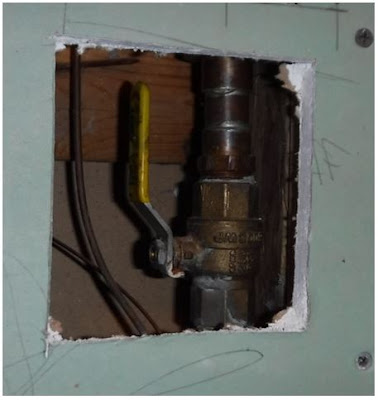
 While water shouldn’t be the cause of an explosion or fire, it can cause a lot of damage to a home. I'm not sure of the statistics, and there probably aren't any accurate. Knowing where the water shut off can save or reduce the amount of water damage in your home, at least water coming from the home's water supply. Floods are the most common and costly natural hazard ( Flood After Fire ), but there isn't a shut-off valve to help prevent flooding from external water sources. However, depending on what insurance site you reference, water damage (often from leaking pipes inside the home) is 7 to 10 times more likely than fire. In August 2019, Chubb Insurance in Australia stated that internal water damage claims were up 72% in the last 5 years ( Chubb reveals its water damage claims are more common and costly than fire and burglary ) The following picture is the main water valve inside a home. The actual main for this home is located in a hole about 18 inches deep near the...

Natural Gas Shut Off

Image
 If there is any utility I am most cautious about, it is the gas. As part of you preparations, you should know where and how to use the natural gas shut off. Natural gas actually has no smell. However, the chemical mercaptan is added and it creates an odor, what most people describe as rotten eggs, so a leak can be detected.  While natural gas is a safe and clean fuel, it is highly combustible and a leak can create a risk of fire or explosion. Natural Gas Signs of a Leak Typically natural gas is shut off because of a suspected leak. Besides the smell of rotten eggs possibly indicating a gas leak, some other potential signs of a leak include: The sound of whistling, roaring, or hissing coming from a natural gas appliance. Damaged gas lines going to a natural gas appliance. Grass or shrubs changing color, looking more brown or rusty, could also be an indicator of gas leaking out of the pipe. Unusual bubbling or soil movement, particularly if it’s near the natural gas line going ...

Electricity Shut Off

Image
 Electricity is certainly dangerous, but I have a lot more experience with electricity than gas, and electricity (usually) isn’t likely to blow up my home, although a spark from an electric source could start a fire or ignite an explosion, particularly if gas has accumulated. To prevent sparks or the risk of electrocution, you need to know where the electricity shut off is. Electricity Shut Off Most people assume the circuit breakers in the house is where the electricity gets turned off. If you’re only wanting to turn off certain parts of the house that is true. But if you want to shut off all the electricity in the home, you need to shut off the electric main. For many homes, the electric main is outside, usually near the electric meter. In many homes, the electric main looks like a big circuit breaker switch. It's this main where electricity is shut off. Most newer homes (particularly those built in the 1970’s and later) will use circuit breakers with similar-looking mains, but t...

Utilities Shut Off

 Utilities are almost an invisible part of our homes. We often take utilities like electricity and running water for granted, until we experience a power outage or water main break that disrupts our normalcy. In the event of an emergency, we should know where the utilities shut off valves, breakers, and/or switches are. If needed, and it can be done safely, shutting off a damaged, or potentially damaged, utility can help prevent or reduce damage or injury. Shut Off Utilities? There are two things you need to know about the home utilities when it comes to emergencies. First, you need to know where the “mains” are. Referring to a utility "main" can refer to the main line that comes to the building, or it can refer to the main valve or switch before the utility goes to the rest of the building. Where utilities shut offs are concerned, we're looking for these main valves or switches. The second is related to the first, you need to know how to shut off the utility. It’s one th...

How do I get prepared while working full time, having small children, and taking college classes?

 First, the question in this post's title is where I started with my family. The answer to that question is a big reason for this blog. It's the reason I wrote my book  Earthquake: What, Where, and How to Prepare Everywhere has multiple threats that can instantly change your life from normal to emergency. Many places have an overriding threat. For example, along the east coast and Gulf states most would probably see the biggest threat as hurricanes. In the midwest states tornadoes might be the threat. Where I live, along the Wasatch Front in Utah, the biggest natural threat is an earthquake. But my logical brain and experience with the outdoors told me the emergency preparedness packs/kits you can buy aren't enough and often have poor equipment with them. Prior to being married and having children being prepared for myself was fairly simple. Then I met a beautiful woman who I married. Six years and three kids later I was working full-time and was almost halfway through a ba...